Flexibility is mentioned in every work conversation today – flexible hours, hybrid model, choice of benefits.
There is another dimension that is not yet much discussed in Slovak companies: flexible employee compensation.
Not as a loan or an advance, but as a modern financial wellbeing tool that can significantly reduce stress, increase loyalty, and strengthen the employer brand.
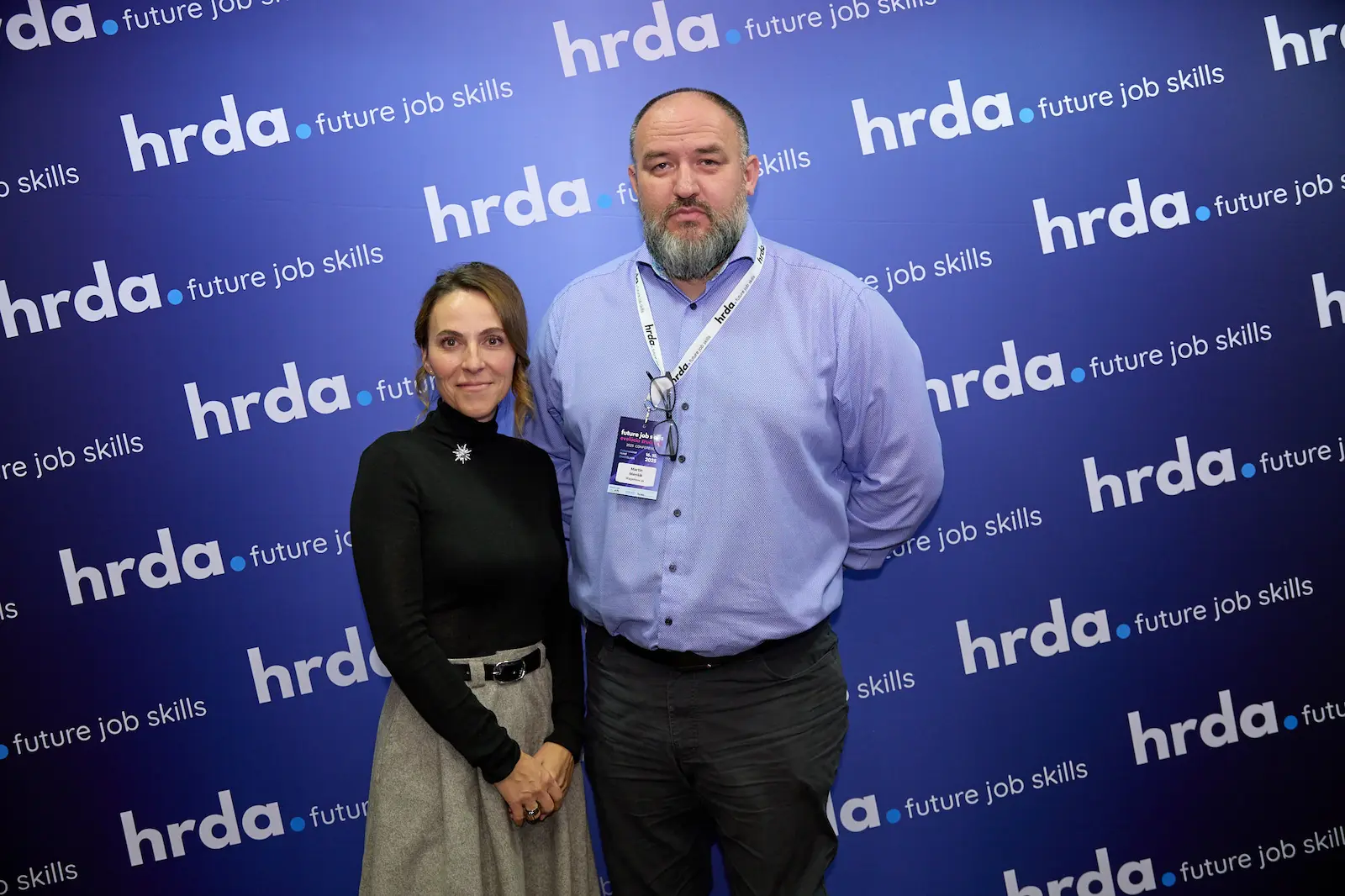
In the Trigon Consulting podcast, we talk with Martin Menšík, an expert in financing and innovation in compensation, about how this approach works in practice, what its risks and opportunities are.

Martin, welcome to the Trigon Consulting podcast. Your professional career is closely linked to finance, corporate sustainability, and innovation in compensation.
To start - how would you explain the concept of flexible employee compensation to someone who has never heard of it before?
Flexible pay is the Slovak response to the global concept called Earned Wage Access. It is a simple but extremely effective tool for improving employees' financial health. It's a solution that allows employees to access their wages when they need them, for example, when they have unexpected expenses.
It's often talked about as the „new benefit.“ But it's not just about benefits, is it? How does flexible financing differ from traditional forms of support, such as 13th salaries, bonuses, or employee loans?
Salaries and bonuses are tools typically tied to an employee’s performance or to the length of time they have spent with the company. A flexible approach to compensation, on the other hand, is a tool for improving their financial well-being. It is a benefit that, on average, 30% of employees who have access to it use at least once a month. It helps employees get through financially challenging periods. Unlike an advance, however, it provides the employee only with what they have already earned and are entitled to, without burdening the company’s administrative processes.
Employee stress that companies ignore
From Trigon Consulting surveys, we know that financial stress is among the top three reasons for decreased performance and turnover. In your experience, how can this stress be reduced through flexible financing?
Financial stress according to available surveys, For example, PwC has a relatively large impact on employees' work performance. Weekly, this amounts to up to 11 hours that a person under financial stress spends ineffectively at work.
Employees have trouble concentrating, leading to presenteeism and later disengagement from work and resignation for a more financially advantageous offer.
A pritom, zdroj finančného stresu sa väčšinou objaví nie pri veľkých finančných problémoch.
Most often, the source of stress is unexpected expenses for which an employee does not have a current reserve. A fine, car trouble, a broken washing machine, back-to-school costs, a good offer to buy something.
In such cases, employees incur unhealthy debt. First, they turn to family and friends, then pawnshops and non-bank institutions. This further increases their stress.
Flexible payouts work differently. The employee knows they have funds available at any time during the month. If they need €50, they take €50.
Unlike loans, however, they don't have to ask anyone for anything. They simply transfer the money to their account. And at the end of the month, they receive their salary reduced by these withdrawals.
What typical situations do employees handle through such a model? Is it more about short-term expenses, unexpected life situations, or also long-term planning?
I already answered above, but for example, these are also various life situations. Banking products such as overdrafts or credit cards are available to creditworthy clients, but many employees never get access to these products.
Single parents, people in regions, people who travel often, young people without a savings cushion. These are all people who are regular and satisfied users WageNow flexible payment.
In the USA, EWA is rapidly becoming the standard among medium-sized companies, with 7 out of 10 already offering the benefit and more planning to implement it. Major brands like Walmart, Uber, and McDonald's have also introduced EWA; multiple reports indicate a significant reduction in turnover.

Interestingly, „financial wellbeing“ is still not discussed much in Slovakia. What do you think prevents companies from fully addressing this topic?
Companies are trying to offer employees “extra” bonuses. We are focusing more on mental health areas than on financial health benefits. This is true even when these two areas are related. Financial health and admitting problems in this area are often very stressful and humiliating for employees.
They would rather remain silent about it. And they suffer in silence. But the situation is improving.
How does it work in practice
Let's get practical. If a company decides to offer its employees the option of flexible access to their pay – for example, immediate access to a portion of their earned money – what does that look like technically? What are the models and tools used in Europe today?
It's very simple. Employees go through online onboarding, WageNow connects to the time tracking system, and the employee sees the amount they've already earned in their app the day after they've worked. This works very well as a motivational factor because people see the connection between their work and their pay.
Which companies benefit the most from such a system? Are they more likely to be large corporations, or on the contrary, smaller companies that want to build trust with their people?
It varies. We have experience with companies that have hundreds of employees, as well as with small businesses that couldn't compete with large companies in terms of benefits.
But they want to be competitive in the job market and in the battle for talent. Among the segments, these are manufacturing, retail, logistics, or the horeca segment. We are already seeing there today that this benefit has a significant stabilizing effect.
From your experience, how do employees react when such a benefit is introduced to them for the first time? Do they feel „help“ or more „control“?
Employees are happy. But it must be said that financial literacy won't be as bad as they say. The average amount people withdraw monthly isn't even €100.
Do flexible pay arrangements really cover unexpected expenses, or do they bridge the gap until payday?.
Up to 55% of employees who use flexible pay (DailyPay) work at least one extra shift per month—simply because they know they can access their pay at any time before payday.
What, in your opinion, is the key difference between a company that does it „just for image“ and a company that genuinely means it as part of a culture of trust?
It's about understanding the employee's needs. About respecting their work, because the current system is set up so that when a new employee joins you, they are essentially financing the employer with their work for up to 6 weeks.
Financial, legal, and HR aspects
The question often arises: is flexible financing legal, safe, and administratively manageable? What should HR managers know before introducing this concept to management?
The flexible payout benefit has no negative impact on the company and does not burden HR or payroll departments with new processes. Integration with the time tracking system automatically sends information about whether an employee is eligible for their wages. Employees can withdraw funds an unlimited number of times within a month.
Your HR department will receive information at the end of the month detailing which employee used how much money, and this will be deducted from their net pay via a salary deduction. The entire amount of “advances” provided will be returned to WageNow in a single payment.
How can the balance between company responsibility and employee autonomy be set? In other words, how can access to funding be enabled while maintaining healthy boundaries?
The Slovak labor market suffers from ailments such as executions, child support claims, installment payments, and the like. A common objection is that the employee will not have the means to repay their debts.
In such cases, our best practice is to provide employees with, for example, a fixed amount or a 40% contribution based on their net pay. This way, they won’t have to worry about other potential payroll deductions jeopardizing their personal finances.
From a company's perspective: are there real costs associated with this, or can it be set up in a way that is financially neutral? And how does it affect the company's cash flow?
Wagenow Benefit Flexible Payout has a relatively simple cost structure. There is a fixed fee per participating employee, which is currently set at €3.
This amount includes all costs, including the provision of funds to employees. The benefit can also be obtained at a negative price, i.e., by using WageNow Financing, whereby these services would harmonize transaction tax costs.
Trendy and the future
If we look at Western markets, the “earned wage access” theme is already becoming standard. How quickly do you think this trend will reach us and what will determine its success?
At WageNow, we believe this trend will not be delayed, as many other trends have been. From the surveys and analyses available to us, the concept of accessing earned wages is becoming the standard.
For example, the International Labour Organization released a major report in April that maps out the benefits of the EWA concept for low-income and low-financial literacy groups. In Slovakia, wage payment has essentially not changed since the 18th century. Employees, through their work, are essentially lending to their employer. The success [of companies] will be decided primarily by the openness of HR departments to real benefits.

Do you see a future connection between flexible financing and other HR trends, such as well-being, personalized benefits, or ESG policy?
One of the most significant benefits of the Earned Wage Access (EWA) system is its social impact. The true meaning of this concept extends beyond a simple „early wage withdrawal.“.
EWA directly affects the area employee financial well-being, which is increasingly perceived today as an integral part of corporate responsibility. Many people live „paycheck to paycheck,“ and even a small unexpected expense, such as a broken washing machine or sudden medical costs, can cause severe stress or lead to the use of short-term loans with extreme interest rates.
Access to EWA helps bridge this gap – allowing people to access money they've already earned without having to resort to predatory loans.
Employees who have access to such a tool often report lower levels of financial stress, higher satisfaction, and greater loyalty to their employer. For companies in high-turnover industries – such as retail, logistics, or hospitality – EWA can even be a strategic tool for improving talent acquisition and retention. Several companies have already confirmed that after implementing an earned wage access system, employee turnover decreased, and the time needed to fill open positions was shortened. This is because less financial stress increases concentration, productivity, and employee engagement.
From the perspective of equality and inclusion, EWA also has other dimensions. It opens doors to financial opportunities for groups that often have limited access to traditional banking products – for example, young people without a credit history, low-income workers, or migrants. EWA thus helps reduce social disparities and promotes financial justice within the organization.
„A Call to Leaders“
If you had to give one specific piece of advice to an HR manager or director who is concerned about this topic, what would you tell them?
Imagine you're a lowest-paid employee at your company. Your washing machine breaks, or your child unexpectedly needs to pay for a school trip. What would you do?
Martin, thank you for taking the time to talk. And perhaps a final question: if companies or HR specialists want to learn more about this topic – where can they start?
Ask you at Trigon Consulting, or go to the website www.wagenow.sk and schedule a meeting. And then want to offer employees a benefit they will really be interested in.
At Trigon Consulting, we believe that real change in HR doesn't start in spreadsheets, but in trust. Flexible financing is one of the tools that enables this trust – when a company acknowledges that an employee also has the right to breathe at their own financial pace. You can find more discussions about trends in HR, leadership, and the future of work at trigonconsulting.sk.

 Slovenčina
  English